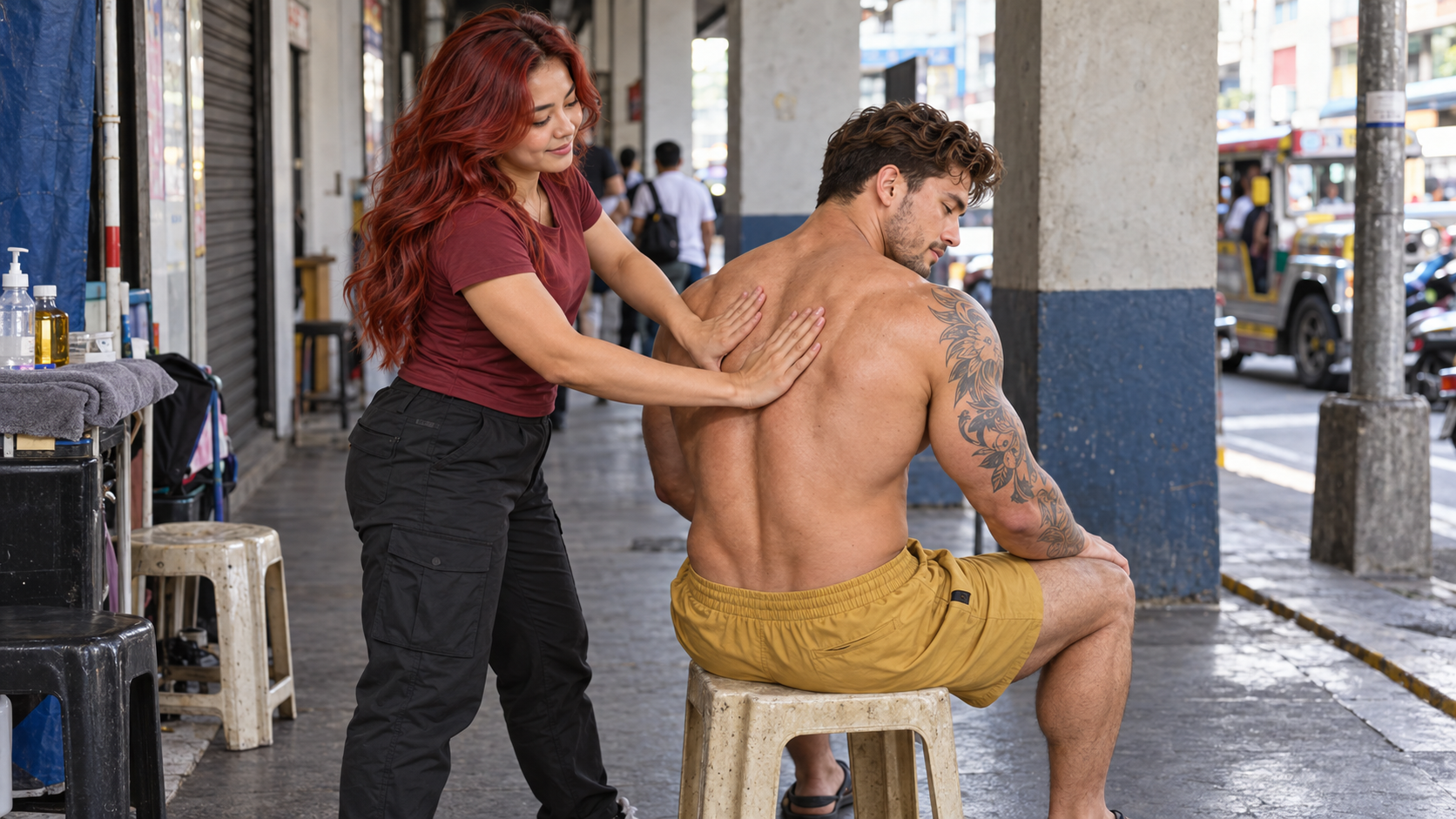

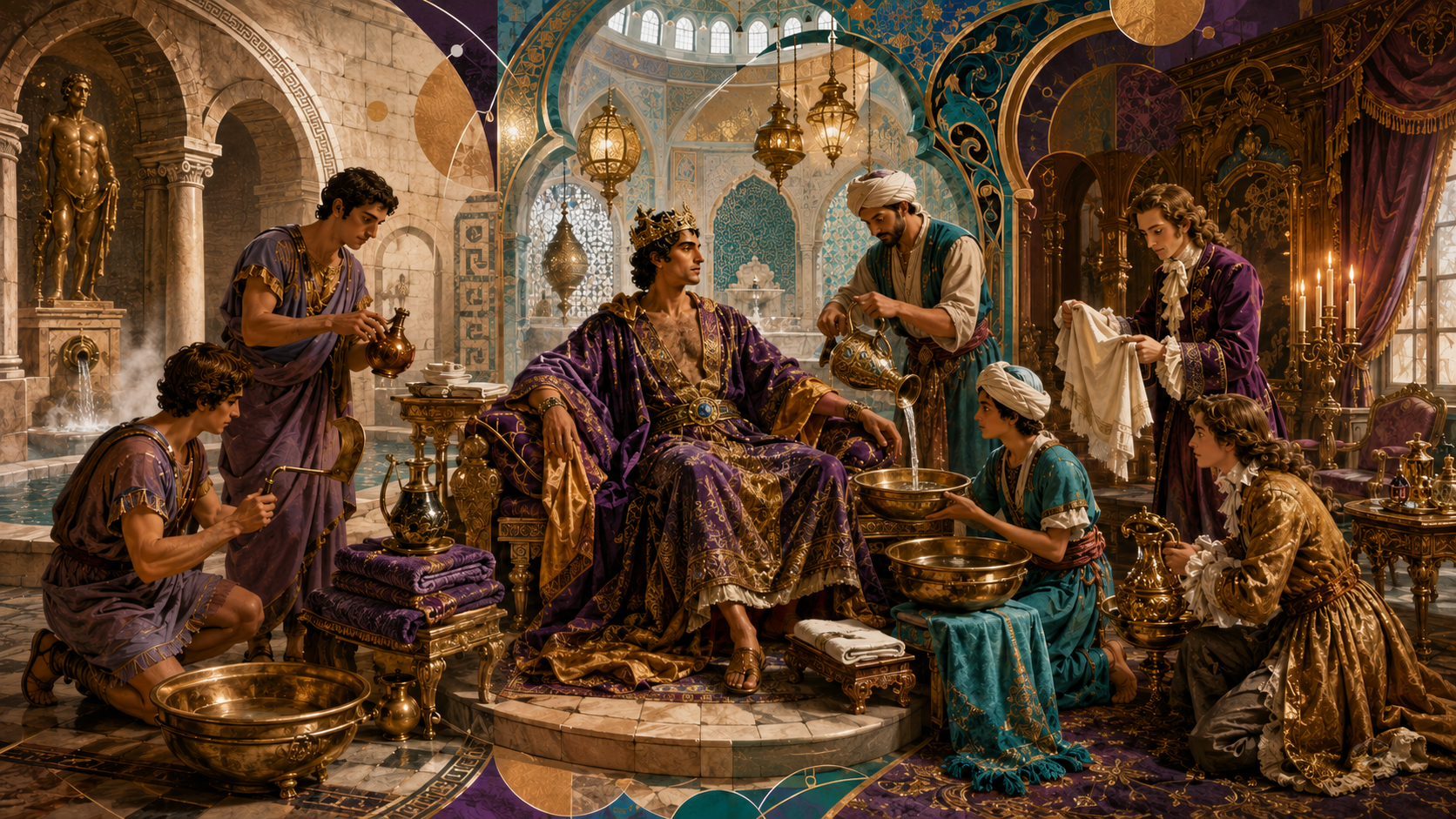
You think ancient kings were out here booking a "60-minute Swedish, medium pressure, please"? Babes, the further you scroll back in history, the more the categories glitch out. Everything was mashed together: rubbing, oiling, scraping, bathing, exercise, anointing, medical poking, and whatever else counted as "body maintenance" in the era of sandals and drama.
But if you were a ruler? ACCESS UNLOCKED. Kings, emperors, caliphs, the whole squad—they could basically speedrun the spa game. Attendants? Check. Bath palaces? Check. Physicians, surgeons, oils, fancy towels, and unlimited time? Check, check, check, and check. Their "bodywork experience" focused less on technique and more on flexing the entire system. Rank = cheat code, and that’s where the real advantage starts.
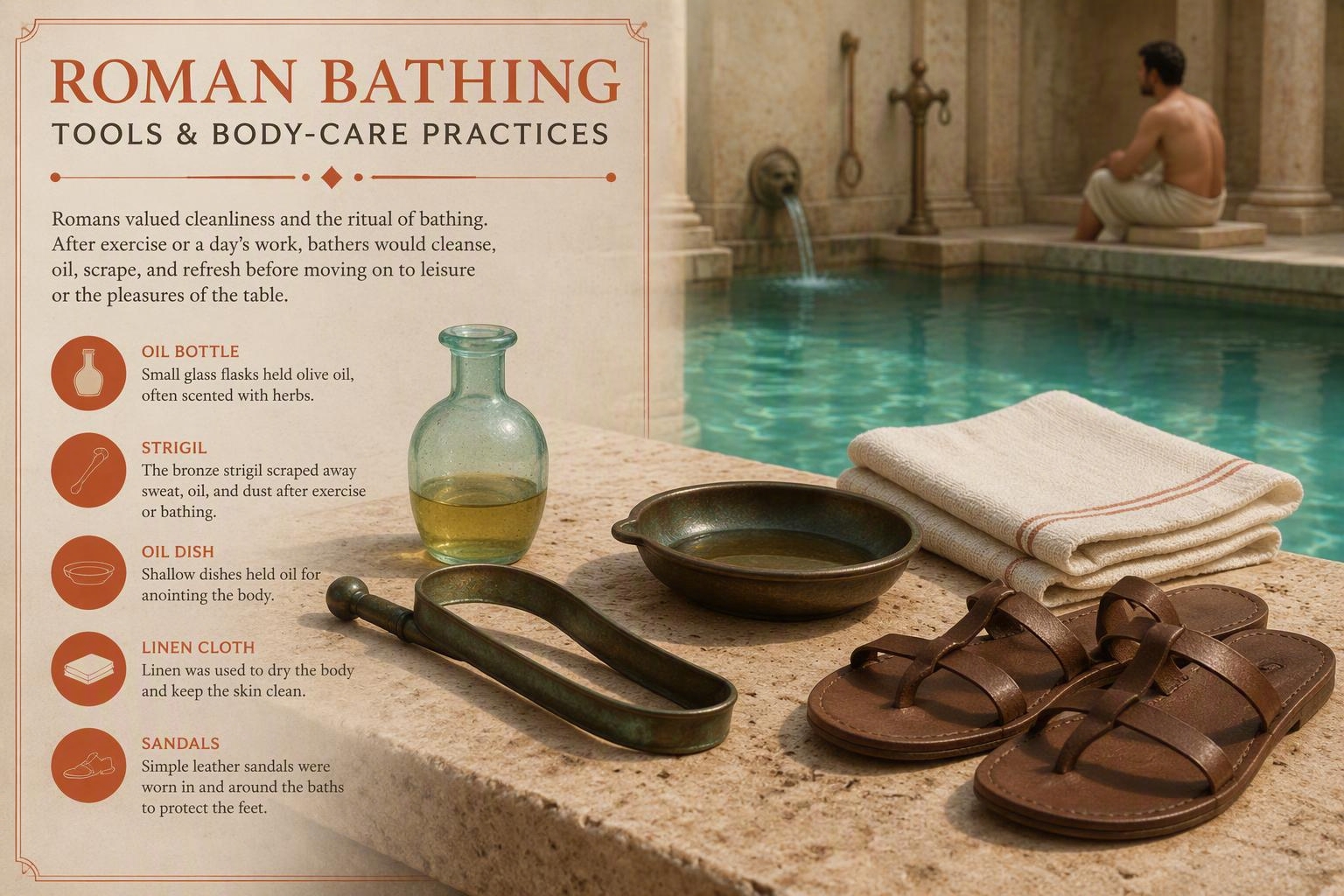
Rome: oil, scraping, baths, and a body managed in public culture
Greek and Roman bath culture? Literal IRL spa package. Exercise, oiling, cleansing, heat, and body care all bundled together. The Met even has receipts: Roman oil bottles and strigils (aka ancient loofahs but make it metal) for scraping off oil, sweat, and dirt. For Roman elites, bathing wasn’t a treat—it was a whole social and architectural lifestyle. Imagine if your gym, spa, and group chat were all the same place.
It would not be accurate to call the whole process a "massage." Still, from a modern perspective, the steps are familiar: prepare the body, apply oil, work on or clean the skin, use heat, rest, and follow a sequence instead of just one treatment. That overlap helps explain why bath culture matters here.
Imperial bath architecture turned recovery into infrastructure.
Meanwhile, in the eastern Mediterranean, the bath meta kept evolving. Umayyad caliphs were out here building next-level private baths inside their palaces. Not just bathrooms—these were full-on regulated environments: heated rooms, water on tap, reception areas, and all the bath gadgets you could flex on your rivals with. That setup carries the same logic as the Roman one, just under a different regime.
And that’s a revolution. If you’re rich enough, self-care isn’t an appointment—it’s literally built into your house. Why travel to the spa when you can just add it to your palace DLC?
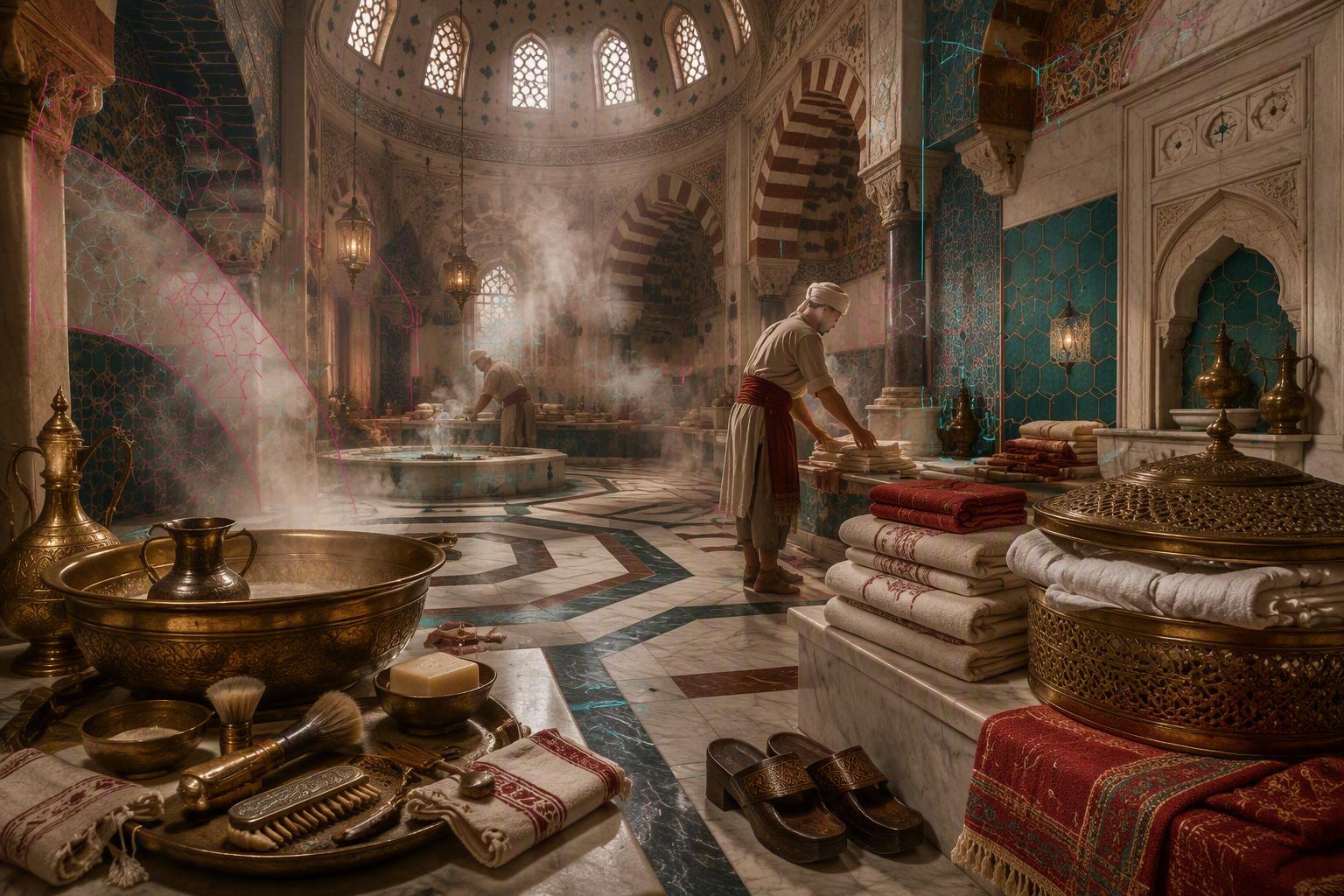
Ottoman hammam culture added ritual, textiles, attendants, and status.
Ottoman receipts (aka art and records) show hammam-going was a complete vibe: bath wrappers, platform clogs, containers for your OOTD, grooming kits, and fabrics that scream "I have status." Court culture and hammam culture? Overlapping Venn diagram. Even if the public could join, the elites brought their own main character energy.
Again, this wasn’t your modern "choose your treatment" menu. Steam, washing, exfoliation, scrubbing, rest, grooming, and hands-on attention all existed together in one mega-ritual. The point is that the bundle came first; modern spas didn’t invent it—they just rebranded what the ancients already did.
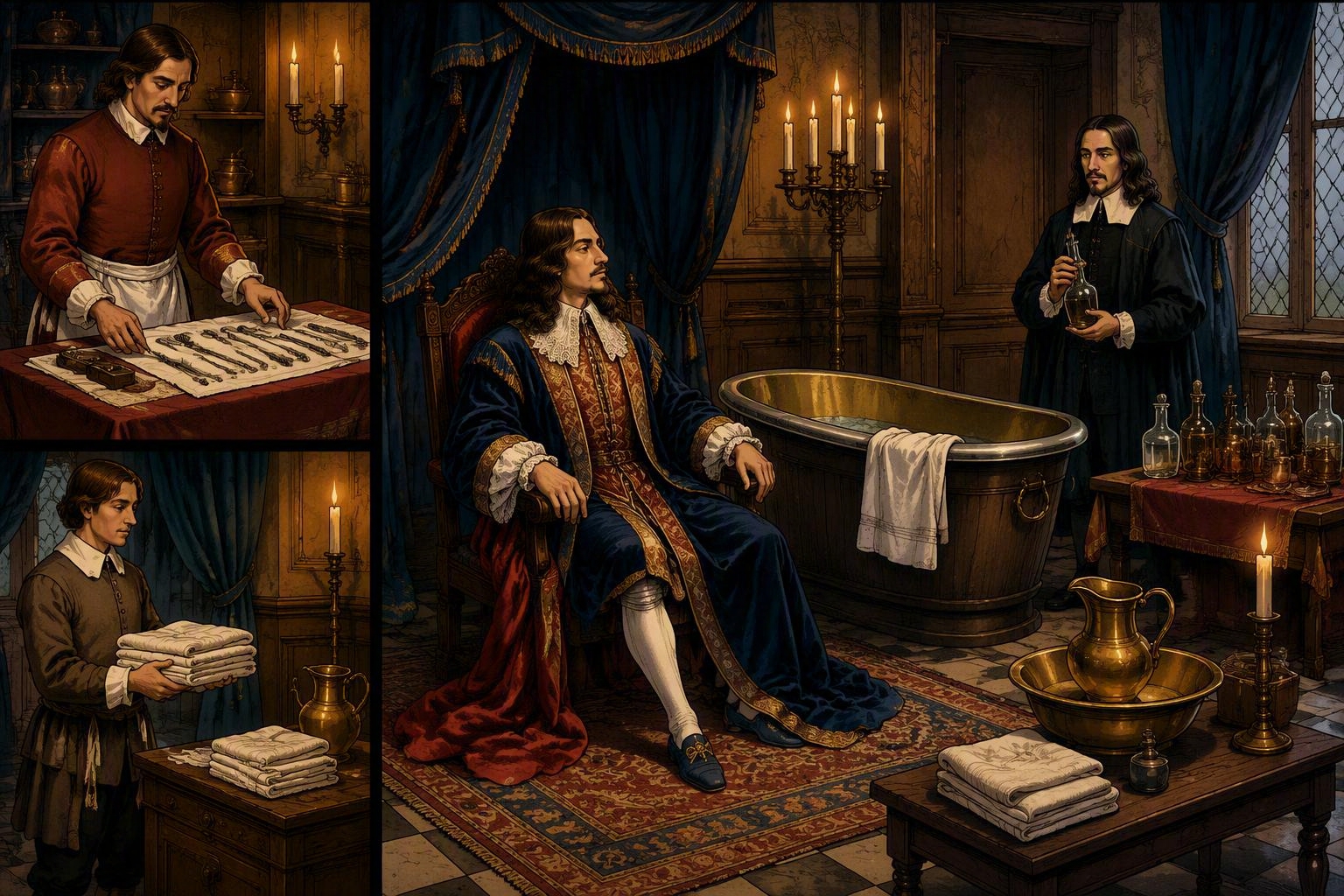
Versailles: the royal body became a department
Fast forward to Versailles: by the 1600s, royal health was basically a department with its own org chart. Physicians, surgeons, apothecaries—everyone had private access to Louis XIV’s body. Privacy? LOL, not in this palace. Dressing, waking up, getting sick, even medical drama—everything was a public event with political side quests.
Bathing? Complicated. Full immersion was sus for Louis XIV—water was basically the final boss of medical anxiety. Still, the king had his own prescription baths and even built a bath apartment. Because if you’re going to be extra, go all in, and the court made sure that choice stayed visible.
So imperial treatment wasn’t always "more spa." Sometimes it was just more staff, more ceremony, more medical hot takes, and way too many people with opinions about royal poop. The real luxury: never being alone, even in the bathroom. Yikes.
Rank changed who touched the ruler—and why
Modern massage: pick your therapist, check the reviews, book the slot, done. Royal care? LOL, you were required to navigate court hierarchy, household politics, medical theory, gender rules, etiquette, and a whole access control system to get near the king’s body.
Touching royalty? High stakes. If you got to wash, shave, dress, examine, or operate on the sovereign, you weren’t merely skilled—you were trusted. It wasn't so much about massage technique as being on the VIP list.
So let’s not romanticize royal body care as endless pampering. Court medicine could be invasive, awkward, and based on medical fanfics we’d swipe left on today. Louis XIV? Dude went through repeated clinical procedures, including major surgery. Royal status = access to the best care available, but not necessarily good care. Sometimes you get more drama, which is why the environment matters next.
The real luxury was control over the environment.
Across all these eras, the real flex wasn’t a single technique—it was environmental control. Heat on demand. Towels and oils ready. Staff on standby. Privacy (if you’re lucky). Rooms built for the vibe and recovery time scheduled. The body becomes a whole institution’s main quest.
Honestly? That is still the pattern for modern massage. Clients judge not just the hands, but the whole chain: temperature, privacy, preparation, cleanliness, transitions, draping, pacing, and whether the therapist seems fully in control.
Royalty didn’t invent massage, and there was never one universal "imperial massage" DLC. What they had was bigger: privileged access to the whole system. The real perk was the infrastructure, not the technique.
Here’s another plot twist modern spa language hides: royal care was a spectator sport. Everything was witnessed, scheduled, and controlled by other people. Privacy? That was a rare loot drop, only if you could negotiate the protocol. You could have a whole palace of staff and still have zero chill time. Luxury ≠ autonomy.
Turns out, the crown wasn’t the treatment. The real main character? The infrastructure. GG, royalty.